
Humphreys Projected Versus Actual Release
A projected date is an estimate based on the sentence information known at that time. It may reflect eligibility, planned physical release, or sentence expiration. An actual Release Date is different. It records that a custody episode ended. Humphreys County iSOMS displays the historical Release Date only after a county-jail event, and it does not publish a projected field for someone still held there.
A pretrial detainee has no sentence to calculate. Bond, dismissal, a plea, a court order, a detainer, or trial may control the next event. A blank iSOMS Release Date and a listed bond amount are not projections. For a sentenced person, start with the judgment and identify whether legal custody is county or TDOC before applying any credit rule.
Find a Humphreys Inmate Release Date
The lookup route follows legal custody. FOIL covers TDOC felony offenders, including eligible state offenders housed locally and people on state community supervision. It is not a full list of county misdemeanor bookings. For a Humphreys County Jail sentence, the court judgment and jail computation are the better sources. The current roster only answers who appears held now.
- Identify the case as pretrial, a county sentence, or a TDOC felony sentence. Do not choose a system from the building name alone.
- For TDOC custody, open FOIL instructions and search by name or TOMIS ID. Match the date of birth and descriptive details.
- Open the FOIL detail. Record the displayed labels exactly, including status, offense, sentence dates, release eligibility, sentence end, or release information when present.
- For a county sentence, obtain the filed judgment and jail-credit entries from the proper court, then ask Humphreys County Jail which credit system applies.
- Check for a detainer, transfer, amended judgment, or parole action. Any of these can make a simple calendar estimate wrong.
- After release, corroborate the event with the iSOMS Release Date or the TDOC release record. The Humphreys County release search covers the county record path.
The live TDOC FOIL form shows the search interface captured on August 1, 2026.
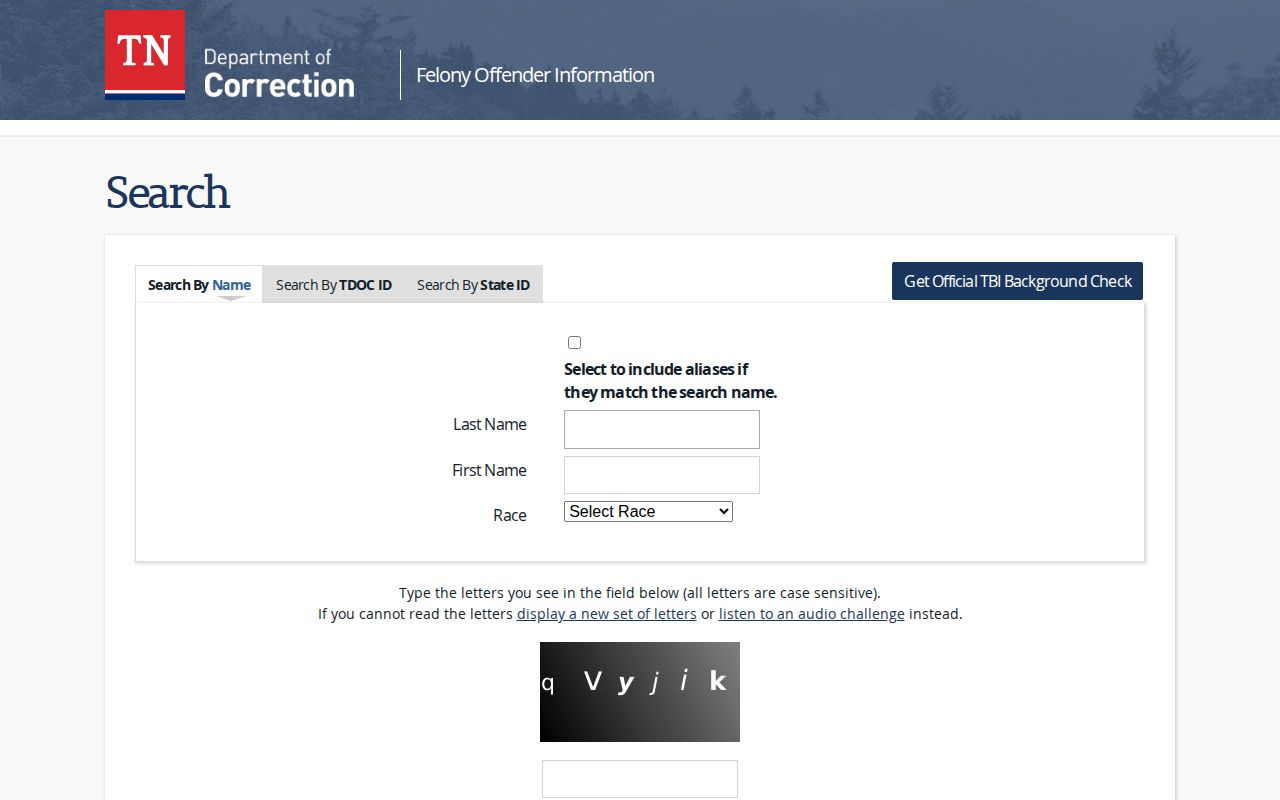
The form supports name searching plus state identifiers, but the detail record and its exact date labels are what must be interpreted.
Note: FOIL is a public snapshot, so TDOC should confirm an exact sentence calculation when timing is disputed.
Humphreys TDOC Release Date Credits
Tenn. Code Ann. § 41-21-236 permits an eligible TDOC inmate to earn from one through sixteen days each month. Up to eight days relate to good institutional conduct, and up to eight relate to satisfactory program performance under TDOC rules. Credits are earned, reviewed, and subject to reduction or removal. They are not a fixed number that a member of the public can subtract from every sentence.
The effect also depends on the offense date and sentence length. For offenses before July 1, 2024, and sentences of two years or less for offenses on or after that date, applicable credits may reduce sentence expiration under the statute. For a sentence longer than two years tied to an offense on or after July 1, 2024, credits can advance parole eligibility without shortening sentence expiration. Section 41-21-236(i) sets general eligibility ceilings, while offense-specific law may impose stricter limits.
Credits cannot reduce a mandatory DUI minimum under subsection (h). Other statutory floors and exclusions may apply. That is why the offense, offense date, sentence length, judgment, and FOIL labels must be read together before discussing a Humphreys County inmate release date.
Humphreys County Jail Release Credits
County misdemeanants have a separate rule. Tenn. Code Ann. § 41-21-236(f) provides credits at the felony statutory rate unless the local jail or workhouse maintains another credit system and the person elects it. The systems cannot be combined. A local alternative cannot provide less than the statutory felony rate.
The sentencing judge sets a release percentage from 30 through 100 percent in ten-point steps, and credits cannot reduce that percentage by more than 25 percent. The judgment percentage and the actual Humphreys County Jail system therefore matter. No public iSOMS control calculates the answer. Ask for existing judgment, jail-credit, and computation records instead of treating the online bond or charge field as a date.
- Jail credit
- Time credited by the judgment or custodian toward service of the sentence.
- Earned credit
- A statutory credit tied to conduct or program work and subject to the governing rules.
- Detainer
- A request or legal hold from another authority that can send the person to another custodian rather than the community.
Why Humphreys Good Time Differs
Humphreys release-date research crosses two credit systems that cannot be reduced to one formula. The TDOC rule in § 41-21-236 can affect parole eligibility, expiration, or both, depending on the offense date and sentence length. The county-misdemeanor rule in subsection (f) starts with the statutory rate but permits an elected local system, subject to its floor and cap. Those are different legal computations.
The contrast is most important for offenses on or after July 1, 2024. A TDOC sentence longer than two years may earn credits that move parole eligibility without reducing expiration. A county misdemeanant instead needs the judgment percentage and the Humphreys jail's applicable elected system. “Good time” can therefore refer to distinct effects even when both people are physically housed in a county facility.
First identify the legal custodian and sentence class. Then obtain the computation tied to that sentence. A TOMIS record may exist for a state offender held locally, while a short local sentence may never belong in FOIL. Physical location alone does not select the credit law.
Humphreys Release Date Labels
TDOC's FOIL landing page promises sentence and release information, but it does not guarantee one universal “Projected Release Date” field on every record. A live detail may instead show a Release Eligibility Date, Expiration or Sentence End Date, Release Date, parole information, or another label. Copy the actual wording. Do not rename one field to fit the question.
| Date | What it answers |
|---|---|
| Release Eligibility Date | When legal consideration may first begin, if the sentence permits it |
| Projected physical release | A conditional operational estimate, not a final event |
| Sentence Expiration or End Date | The outer term under the current computation |
| Actual Release Date | The recorded departure after it occurs |
An eligibility date can pass without release because parole is discretionary, a plan is not approved, or another hold remains. A sentence-end date can also differ from the end of supervision. Exact labels protect those distinctions.
Humphreys Release Percentages Vary
Tennessee has no single rule that every inmate serves 85 percent. Tenn. Code Ann. § 40-35-501 changes by offense, offense date, and repeat-offense status. Some older aggravated-robbery provisions use an 85-percent structure with a 70-percent floor after allowed credits. Certain listed offenses in later periods use other 85-percent rules, and some repeat or violent offenses have 100-percent service requirements with narrow credit effects.
The 2022 Truth in Sentencing Act created full-service requirements for enumerated violent offenses committed on or after July 1, 2022, subject to the current statute's exact parole and credit terms. For specified offenses on or after July 1, 2024, credits of up to 15 percent may affect parole eligibility while expiration remains undiminished. A legal eligibility percentage does not guarantee Board approval.
The safe method is to read the current subsection that matches the conviction and date, then compare it with the judgment and TDOC computation. A headline percentage alone cannot produce a reliable Humphreys County release date.
Note: Parole eligibility permits consideration; it does not promise a hearing result, approved plan, or physical release.
Why Humphreys Release Dates Change
FOIL is not the official sentence-computation worksheet. A date can change after new facts, credits, or orders reach TDOC or the jail. Compare the current record with the prior snapshot and identify the reason rather than assuming an error.
| Factor | Possible effect |
|---|---|
| Credits earned, lost, or restored | Moves eligibility or expiration where the statute permits |
| Jail-credit correction | Changes time already counted as served |
| Concurrent or consecutive correction | Changes how multiple sentences combine |
| Amended or new judgment | Replaces facts used in the prior calculation |
| Detainer or pending charge | May block community release or cause transfer |
| Parole action or incomplete plan | Can defer, deny, grant, or rescind a possible exit |
Emergency authority and offense-classification corrections can also alter the path. For a disputed state computation, use the sentencing judgment plus TDOC's sentence calculation or release authorization. For a county term, use the judgment and Humphreys jail record.
Humphreys Weekend Release Is Temporary
Tenn. Code Ann. § 40-20-117 lets a judge order a county-jail or workhouse sentence of no more than eleven months and twenty-nine days to be served on nonconsecutive days, including weekends. The order specifies return and release times, and the jail carries it out. A person outside the jail between intervals is not necessarily discharged from the sentence.
Humphreys iSOMS may show a charge label such as “weekender serving time,” but that text does not prove final release. Review the order, later return event, and completed booking episode. This local sentence pattern is another reason a single date or roster absence cannot answer when the whole sentence ends.
Confirm Humphreys Inmate Release Dates
Close to the event, recheck the correct custodian. For a county episode, a populated iSOMS Release Date establishes departure from that booking but not the reason. Call Humphreys County Jail at 931-296-2301 and ask jail control whether the person went to the community or another custodian. For a TDOC sentence, verify FOIL status and obtain the release authorization or historical record when durable proof is needed.
A Tennessee SAVIN alert is a prompt, not the final record. The Humphreys VINELink release check explains notification registration and the warning that transfer to a county detainer remains custody. The final confirmation is the actual release entry, read with its destination and the controlling court or TDOC record.
When a court order and public locator seem to disagree, compare their dates before drawing a conclusion. A new judgment may not yet appear in FOIL, or a county release may be followed by immediate TDOC intake. Ask for the existing sentence-computation or release-authorization record tied to the same docket and TOMIS number. That sequence distinguishes a stale public display from a lawful transfer or recalculation.